Binance SAFU Explained: $1B Bitcoin Fund Plus Company Cash
- Primary Signal: Binance SAFU Explained: $1B Bitcoin Fund Plus Company Cash
- Overview: Binance says losses from the 29 October 2026 breach will be covered from company funds and its SAFU emergency fund. Here is what SAFU is, what Binance has stated, and what remains ...
- Verification: Analyzed and compiled by Global Football Odds editorial monitoring desk.
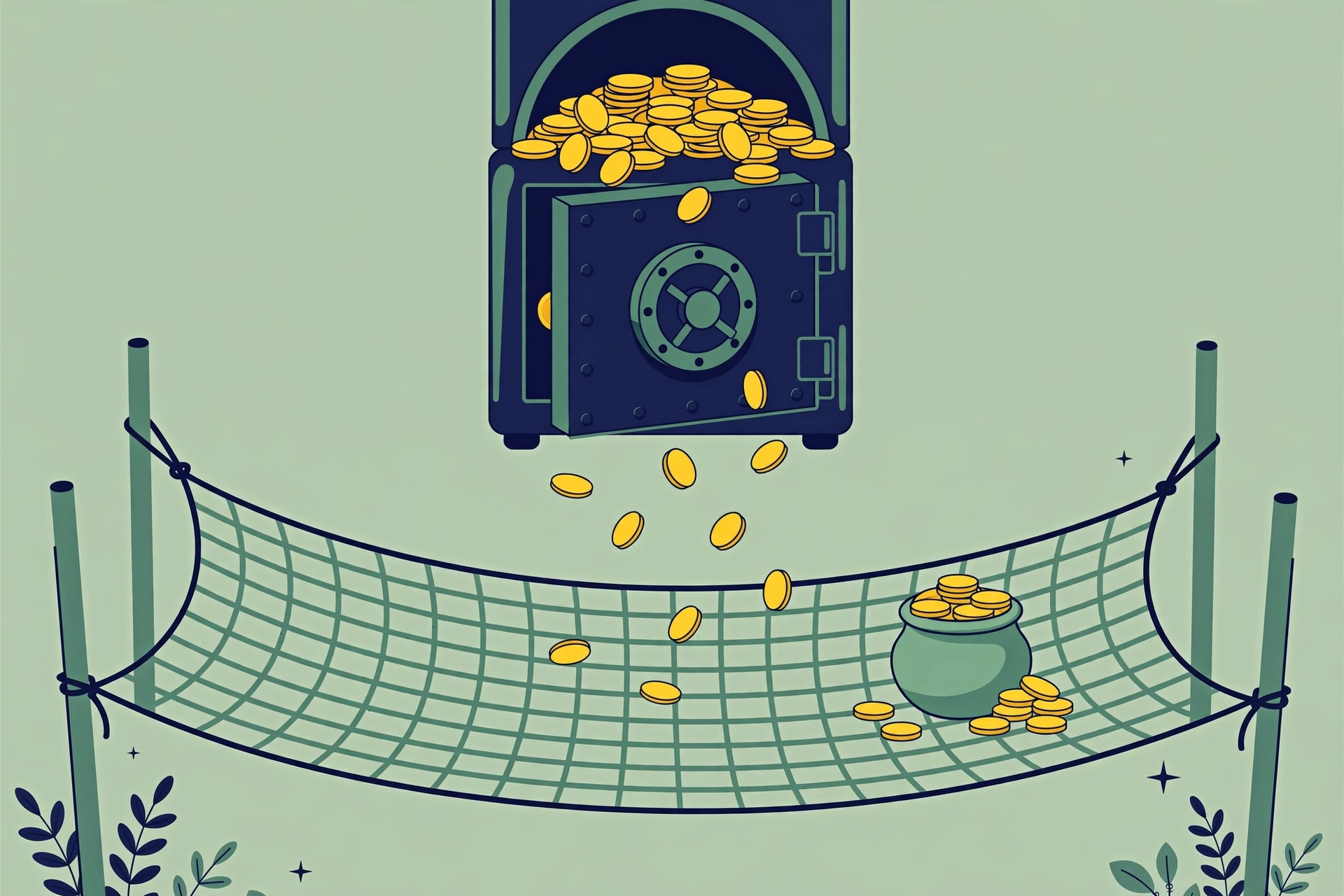
As of 30 October 2026, sAFU is best understood as a backstop, not a vault holding the full value of every user balance. It stands for the Secure Asset Fund for Users, an emergency fund Binance set up for extreme situations, and it is reported to hold about $1 billion in bitcoin. That single number already frames the key question after the 29 October 2026 breach: how does a $1 billion fund relate to an estimated $6.3 billion loss?
The arithmetic gives the first answer. Even if the whole reported SAFU holding were used, it would cover only a fraction of a $6.3 billion estimated impact, which would make this the largest crypto theft on record, ahead of the $1.5 billion Bybit theft in 2025. That is why Binance co-CEO Yi He statement matters in full: she said all losses will be covered from company funds plus SAFU, and that user funds are safe. The company funds part is not a footnote; it is what bridges the gap between the fund and the total.
SAFU arithmetic
In practice, that pairing means two different pots are being pointed at one loss. SAFU is the named emergency reserve, held in bitcoin, while company funds are the wider balance sheet of the exchange itself. No detailed breakdown has been published of how much would come from each pot, in what order, or over what timetable, so the split remains a matter of company statement rather than published accounting at this stage.
Frozen assets form a third, separate element, and they should not be confused with a SAFU payout. About $3 billion has been frozen so far, including $2.3 billion in USDT and USDC, with Tether freezing more than $1.567 billion in USDT, Circle about $823 million in USDC, Ripple about $200 million, and World Liberty Financial $27 million in USD1. If frozen funds are eventually recovered, the net loss needing coverage shrinks; if they stay frozen without recovery, the coverage burden stays higher. Freezing is containment, not payment.
The form SAFU takes also matters. A fund held in bitcoin changes value as bitcoin changes value, and bitcoin itself fell below $77,000 after the breach, down about 4.5 percent in 24 hours to $76,664, later around $77,984. That does not mean SAFU has failed, but it does mean a bitcoin-denominated backstop cannot be read as a fixed dollar guarantee. Its dollar value at any moment depends on the market, which is another reason the company-funds commitment matters.
What SAFU does not settle
What SAFU does not do, on the facts available, is settle the loss by itself or prove that backing is whole. The next proof-of-reserves snapshot is due on 1 November 2026, and it will show whether stolen assets were replaced, including whether ETH backing recovers from near 94 percent, down from 100 percent on 1 October after around 204,500 ETH was moved from Binance 14. Until that snapshot appears, full coverage rests on Binance statement, not on published reserves for this incident.
The preliminary breach mechanism also shapes how a SAFU claim should be read. Investigators have pointed, on a preliminary basis, to a compromised DevOps engineer laptop giving access to a service container and allowing unauthorised withdrawals, with EIP-7702 reportedly used on Binance 14 to turn it into a sweeper, and no evidence so far of a wallet private key leak. SAFU is an emergency response to a loss, not a finding about how the loss happened, and it does not by itself answer whether the underlying access route is now secure.
Users waiting on services should keep the coverage claim and the service timetable separate. Deposits and withdrawals were suspended as a precaution, and Yi He expects withdrawal resumption to begin within 48 hours, though some reports have said deposits were unaffected, a discrepancy that remains unresolved. A promise to cover losses does not reopen withdrawals, and a reopening does not prove losses have been replaced.
Frequently asked questions
FAQ: What is SAFU? Binance emergency fund for users, reported at about $1 billion in bitcoin. Can SAFU alone cover a $6.3 billion loss? No, on the reported figures it cannot, which is why Yi He cited company funds as well. Is full coverage confirmed? Not by published reserves yet; the next proof-of-reserves snapshot is due 1 November 2026, and readers should rely on official Binance channels, since the investigation is ongoing and figures are preliminary.
📖 Continue Reading the Full Story
Continue reading this article on Global Football Odds.
⚡ Access Full Content NowMore from Global Football Odds



 🎰 WinBar VIP
Binance Withdrawals: What the 48-Hour Restart Looks Like
Binance co-CEO Yi He expects withdrawal resumption to begin within the next 48 hours. That is an expectation, ...
 ⚽ SportsBet Insights Live
How Betting Odds Work (Explained So Simply Anyone Gets It)
Decimal, fractional, American — every odds format explained in plain English, plus how to convert odds into pr...
 🐋 CryptoAce VIP
Bitcoin Explained: The 5-Minute Beginner's Guide
What is Bitcoin, how does it actually work, and how do you buy it safely? The jargon-free explainer every begi...
 🏆 WorldCup2026 Cities
World Cup 2026 Stadium Map Explained: Distances, Clusters and the Smart Way Fans Travelled
Sixteen stadiums across three countries meant huge distances — the fans who travelled by regional cluster enjo...